
12 Unique In-Store Marketing Ideas for Small Business to Boost Sales
Unlock your storefront's potential! Discover 12 unique in-store marketing ideas for small business to attract customers, enhance experience, and significantly boost your sales.
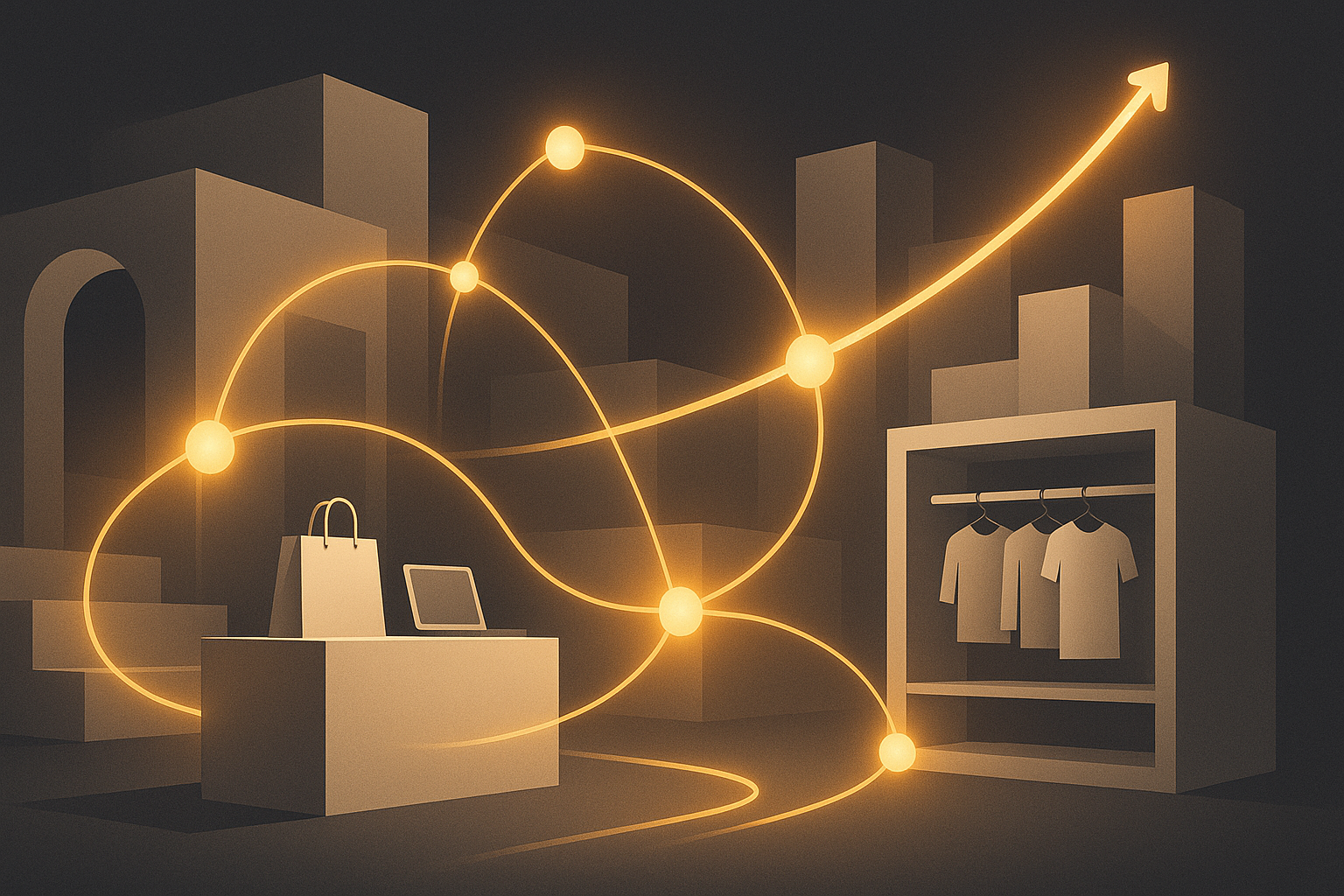
Your storefront is running 24/7, whether you're using it or not. The lighting, the layout, the thing your customer sees the second they walk in — all of it is either working for you or it's just... there. Most small-business owners treat their physical space as overhead. The smart ones treat it as a marketing channel that never sleeps and never costs a dime in ad spend.
Here's the shift: every square foot of your store is either a missed opportunity or a touchpoint that builds your brand, earns a share, or turns a one-time visitor into a regular. Below are 12 ways to make that shift real, starting this week.
Idea 1: The 'Instagrammable Moment' Photo Op
Pick one wall, corner, or display and design it purely to be photographed. Not your product shelf — a moment. A neon sign with a punchy line, a mural, an oversized version of your logo, a seasonal backdrop that changes every few months.
Why it works: every photo taken there is a free ad that reaches your customer's entire network, tagged with your location.
First step: find the spot in your store with the best natural light, and put up a single bold visual element there this week. Add a small, tasteful sign: "Tag @yourbusiness — we might repost you." That's it. No prize needed to start.
Idea 2: Host Local Artist or Vendor Pop-Ups
Invite a local ceramicist, jewelry maker, coffee roaster, or florist to set up a small table in your store for a Saturday afternoon. They bring their own following, you bring your space and your regulars.
Why it works: it's instant cross-promotion — their audience discovers you, yours discovers them, and you both post about it beforehand, doubling your reach for free.
First step: message two local makers you already like on Instagram this week and propose a 3-hour pop-up. Split the promotion: they post to their followers, you post to yours.
Idea 3: Interactive Product Demos or Mini-Workshops
Let people touch, try, and use before they buy. A hardware store could run a 15-minute "how to fix a leaky faucet" demo. A skincare shop could do a 10-minute "build your routine" session. A bookstore could host a 20-minute reading circle for a new release.
Why it works: experience sells faster than description, and people who attend a demo tell their friends about the experience, not just the product.
First step: pick your single best-selling or highest-margin product and design one 15-minute demo around it. Run it once this month, on a set day and time, and promote it a week out.
Idea 4: Curated Store Playlist or Branded Scent
Sound and smell are memory triggers most stores completely ignore. A specific, curated playlist (not just a radio station) or a signature candle scent becomes something customers unconsciously associate with you.
Why it works: sensory branding creates recall that visuals alone can't — customers will smell that scent elsewhere and think of your store.
First step: build a 2-hour playlist this week that matches your brand's personality (upbeat boutique vs. calm spa vs. gritty hardware store), and play it consistently. If scent fits your space, pick one signature candle or diffuser scent and stick with it everywhere — same scent, every visit.
Idea 5: Community Board & Local Partnership Displays
Dedicate a small section of wall or counter space to flyers from other local businesses, events, or causes — with your own promotions mixed in.
Why it works: it positions you as a hub for the neighborhood, not just a transaction point, and it gives other local businesses a reason to send customers your way in return.
First step: put up a simple corkboard or frame this week and invite three neighboring businesses to post something on it. Ask if you can put your flyer on their counter too.
Idea 6: 'Behind the Scenes' Display or Station
Show your process. A bakery could have a window into the kitchen. A tailor could display fabric sourcing and tools. A coffee shop could post a map showing where each bean is from.
Why it works: transparency builds trust, and process is inherently more interesting than a finished product on a shelf.
First step: identify one part of your process customers never see, and make it visible — a small window, a photo series, or a one-page "how we make it" card near the register.
Idea 7: Loyalty Program Activation Station
Don't just ask people to sign up for rewards at checkout in a rush. Create a small, dedicated spot — a tablet on a stand, a QR code with a visible incentive ("Scan for $5 off today") — that makes joining feel like a mini-moment, not an afterthought.
Why it works: loyalty programs fail mostly because sign-up is an awkward add-on at the register; giving it its own space and moment increases enrollment.
First step: set up a small stand near checkout with a QR code and a clear, immediate incentive for scanning it right now — not "future discounts," but something today.
Idea 8: Sensory Experience Zones
Let people taste, smell, or handle before they decide. A spice shop could have an open jar tasting station. A skincare brand could set out testers on a tray, not locked in a case. A pet store could let dogs sample treats at the counter.
Why it works: removing the barrier between "look" and "try" shortens the path to purchase and makes the visit memorable enough to talk about.
First step: pick one product category and set up a no-friction trial station — no need to ask an employee, no locked case. Just out, accessible, with a small sign explaining what it is.
Idea 9: Local Charity Tie-In Display/Donation Station
Partner with one local cause and create a simple physical tie-in — a jar for round-up donations at checkout, a wall showing funds raised, or a percentage-of-sales day tied to a specific local nonprofit.
Why it works: community-minded customers actively choose to spend with businesses that visibly give back, and it gives you a natural reason to post updates ("we raised $340 for the shelter this month").
First step: pick one local nonprofit this month, set up a simple donation jar or round-up option at checkout, and commit to sharing the total raised at month's end — in-store and on social.
Idea 10: Kids' Corner or Pet-Friendly Zone
A small designated space — a few toys and a low table, or a water bowl and treat jar by the door — signals that your store welcomes people who might otherwise rush their visit or skip it entirely.
Why it works: removing the "I can't bring my kid/dog in there" barrier extends visit length and widens who feels comfortable stopping by.
First step: clear one small corner or spot by the entrance this week and add either a few kids' activities or pet basics (bowl, treats). Put a small sign welcoming both.
Idea 11: Customer Feedback Wall or Journal
Set out a physical journal, corkboard with sticky notes, or a chalkboard where customers can write what they love, suggest what's missing, or just leave a note.
Why it works: it's a visible signal that you listen, and it often surfaces content — real, unscripted quotes — you can reuse in your marketing with permission.
First step: put a notebook and pen on the counter this week with a simple prompt: "Tell us something — good, bad, or weird." Read it weekly.
How to do this with Castopia
None of these ideas require a marketing degree, but they all generate something worth sharing — and that's where most owners fall behind. You run the pop-up, the demo, the donation drive, and then... nobody posts about it because there's no time.
That's the gap Castopia fills. Once it's scanned your website and built your brand profile, you can walk out of your in-store event and just chat "make me a post about today's local vendor pop-up" — and get branded content variants ready to publish, in your voice, on the spot. The daily creator loop can even prep a short-video script each morning ("film 20 seconds of your behind-the-scenes station today") so ideas like #6 and #8 actually turn into content instead of staying good intentions.
And when something in-store works — say the donation jar or the loyalty sign-up station is driving real foot traffic — Castopia's ad agent can turn that same moment into a small paid campaign, starting at a few dollars a day, scaling the ones that perform. Your store does the work of creating the moment; Castopia does the work of making sure people outside your four walls hear about it.
Your next step
Pick exactly one idea from this list — not two, not "I'll do a few" — and implement it before this week ends. The smallest one (feedback journal, community board, loyalty station) takes under an hour and gives you something to post about immediately.
Don't just learn marketing — let Castopia do it with you
Castopia learns your business, then turns what you read here into posts and campaigns in your voice — you stay the face, it does the busywork.
Start free with CastopiaKeep learning

10 Customer Onboarding Ideas for Small Businesses That Build Lifelong Loyalty
Nail your customer onboarding and turn new customers into lifelong loyal fans. Here are 10 actionable ideas to implement this week.
7 min read
10 Creative Lead Magnet Ideas for Small Businesses to Grow Your Email List
Nobody gives their email for free. Discover 10 creative lead magnet ideas to turn website visitors into subscribers and rapidly grow your small business email list. Get actionable, proven strategies.
6 min read
Smart Pricing Strategies: 10 Ideas for Small Businesses to Attract & Retain Customers Without Discounting Your Value
Most small-business owners treat pricing like a math problem: add up costs, tack on a margin, done. But your price is the loudest thing you say to a customer before they've read a word of your copy or seen a single ad. It signals quality, positioning, who you're for, and who you're not for. Change your pricing structure and you change your marketing — often more powerfully than any ad ever could.
7 min read